Queensland’s Iconic Tropical Flowers: A Guide to Native Beauties
Queensland is a place where nature does not whisper. It announces itself in colour, texture and scale. The air is warmer, the light brighter, and the landscapes feel alive in a way that is instantly recognisable. From the steamy rainforests of Far North Queensland to the subtropical coastlines around Brisbane and the Sunshine Coast, flowers grow with confidence here. They sprawl, climb, burst open and return year after year, shaped by heat, humidity, seasonal rain and ancient soils.
Queensland tropical flowers are not just beautiful. They are functional, resilient and deeply tied to the ecosystems they support. Many support wildlife found only in Australia, and some have close relationships with local pollinators and seasonal cycles. Their flowering cycles align with rain patterns, temperature changes and animal migrations. Some are short-lived but spectacular. Others bloom quietly over months, feeding wildlife when little else is available. Together, they form the floral identity of Queensland and tell a story of survival, adaptation and abundance.
For thousands of years, Aboriginal knowledge systems across Queensland have understood these flowers as more than decoration. Flowering times were observed to mark seasonal change, indicate food availability and guide cultural practices. Today, these same flowers inspire gardeners, designers and florists who want to celebrate Australian beauty in a way that feels authentic and connected to place.
This guide explores Queensland’s most iconic tropical and subtropical native flowers. Each one reflects a specific region, climate and ecological role. Whether growing wild, cultivated in gardens, or arranged into a bouquet, these blooms are reminders that some of the world’s most extraordinary flowers are growing right here in Queensland.
Tea Tree (Melaleuca species)
Where it grows in Queensland
Tea Trees (Melaleuca species) are found throughout Queensland’s wetlands, floodplains, coastal swamps and river systems, particularly on the Sunshine Coast, Fraser Coast, Cape York and along the northern river systems. Queensland is notable in that it supports both subtropical and tropical types of Tea Tree, each adapted to very different climates and landscapes.
In the subtropical regions of southern and central Queensland, Tea Trees such as Melaleuca quinquenervia and Melaleuca alternifolia thrive in seasonally wet lowlands, swamps, and along slow-moving creeks. These species are well adapted to cooler winters and periodic flooding, forming dense, paperbark forests that stabilise soil, filter water, and provide shelter for wildlife. This is also the region where the famous Australian Tea Tree oil is traditionally sourced.
In contrast, tropical Tea Trees dominate the far north of the state, especially across Cape York and the wet tropics. Species like Melaleuca viridiflora and Melaleuca leucadendra grow in monsoonal landscapes shaped by extreme wet and dry seasons. These trees are taller and more open in form, often lining floodplains and seasonal waterways, where they play a crucial role in managing water flow, preventing erosion, and supporting biodiversity during the heavy tropical rains.
Together, these subtropical and tropical Tea Tree communities highlight the ecological diversity of Queensland, showing how the same plant group has evolved to flourish in both mild coastal climates and harsh monsoonal environments.
When it flowers
Most species bloom from spring through summer, although some flower after heavy rain.
What makes it iconic
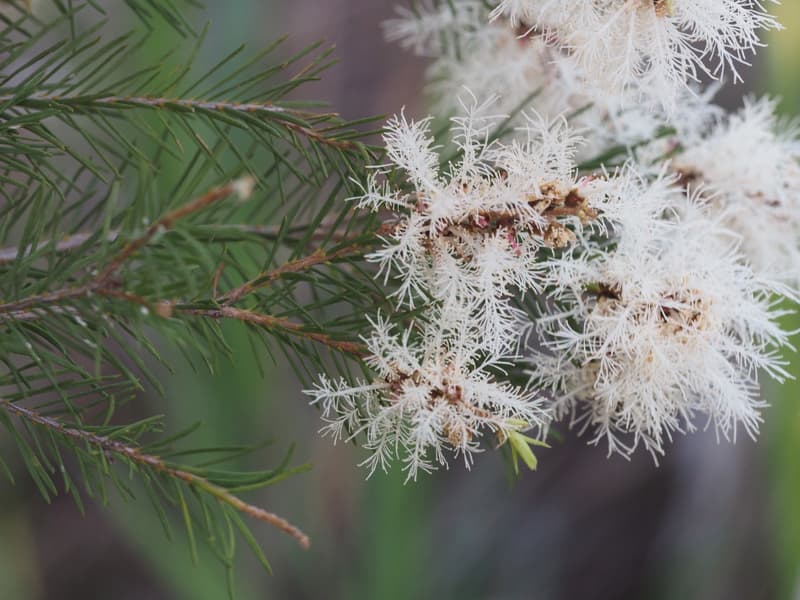
The fluffy, bottlebrush-like white and cream flowers transform entire wetlands into misty landscapes when in bloom. The papery bark and fine leaves add to their distinctive appearance.
Ecological and cultural significance
Tea Trees provide habitat for birds, frogs and insects, and their nectar feeds a wide range of pollinators. Traditionally, the leaves were used for medicinal purposes, and the tree remains a symbol of healing and resilience.
Floral inspiration
Tea Tree flowers soften bold native arrangements and add a wild, natural texture that reflects Queensland’s coastal wetlands.
Illawarra Flame Tree (Brachychiton acerifolius)
Where it grows in Queensland
The Illawarra Flame Tree is common throughout south-east Queensland, where it thrives in warm, subtropical conditions. It is especially prominent in Brisbane, the Gold Coast, the Sunshine Coast and the surrounding hinterland rainforests. In these areas, it grows along forest edges, in open woodlands, and increasingly in urban landscapes, where it has become a much-loved street and park tree. Its adaptability to different soils and its tolerance of dry periods have made it a popular choice for both natural regeneration and ornamental planting.
When it flowers
Late spring to early summer.
What makes it iconic
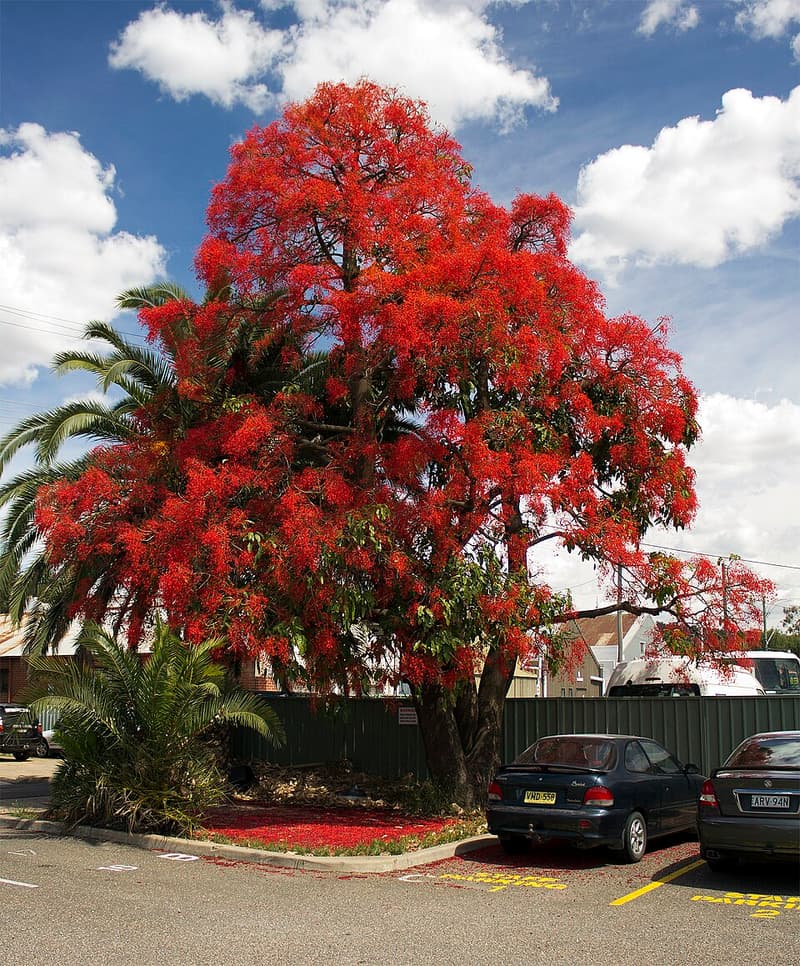
What makes the Illawarra Flame Tree truly iconic is its dramatic transformation. Just before flowering, the tree sheds its leaves entirely, leaving bare branches that suddenly erupt in masses of vivid scarlet flowers. The effect is striking, with entire canopies glowing red against the blue Queensland sky. This leafless flowering display allows the colour to dominate the landscape, making the tree visible from long distances and turning it into a seasonal landmark wherever it grows.
Ecological and cultural significance
The nectar-rich flowers are an important food source for lorikeets, honeyeaters and native bees, drawing wildlife into both bushland and urban areas. Ecologically, the tree plays a role in supporting pollinators during a time of high energy demand at the start of summer.
Culturally, the flowering of the Flame Tree has long been recognised as a seasonal indicator. In some Aboriginal seasonal calendars, the appearance of the red flowers signalled a shift in weather patterns and guided seasonal movement, food gathering and other activities. The tree continues to hold cultural meaning today, symbolising renewal, heat, and the rhythm of the Australian year.
Floral inspiration
In floral design, Illawarra Flame Tree blooms inspire bold, dramatic compositions. Their intense red colour is often used as a focal point in arrangements, creating strong visual contrast and emotional impact. Designers draw on the tree’s natural spectacle to create red-centred bouquets, sculptural installations and large-scale displays that celebrate energy, warmth and seasonal abundance, echoing the powerful presence the tree has in the landscape itself.
Native Hibiscus (Hibiscus heterophyllus)
Where it grows in Queensland
Native Hibiscus is found along Queensland’s eastern coastline, stretching from the tropical regions of Far North Queensland down into the subtropics of the southeast. It thrives in coastal forests, open woodlands, rainforest margins and along creek lines, where warm temperatures, humidity and seasonal rainfall support its growth. In many areas, it grows as a large shrub or small tree, forming part of the natural transition between dense rainforest and more open landscapes. Its resilience to heat and variable moisture makes it a familiar and dependable presence in both wild and cultivated settings.
When it flowers
Spring through summer, sometimes extending into autumn in warm areas.
What makes it iconic
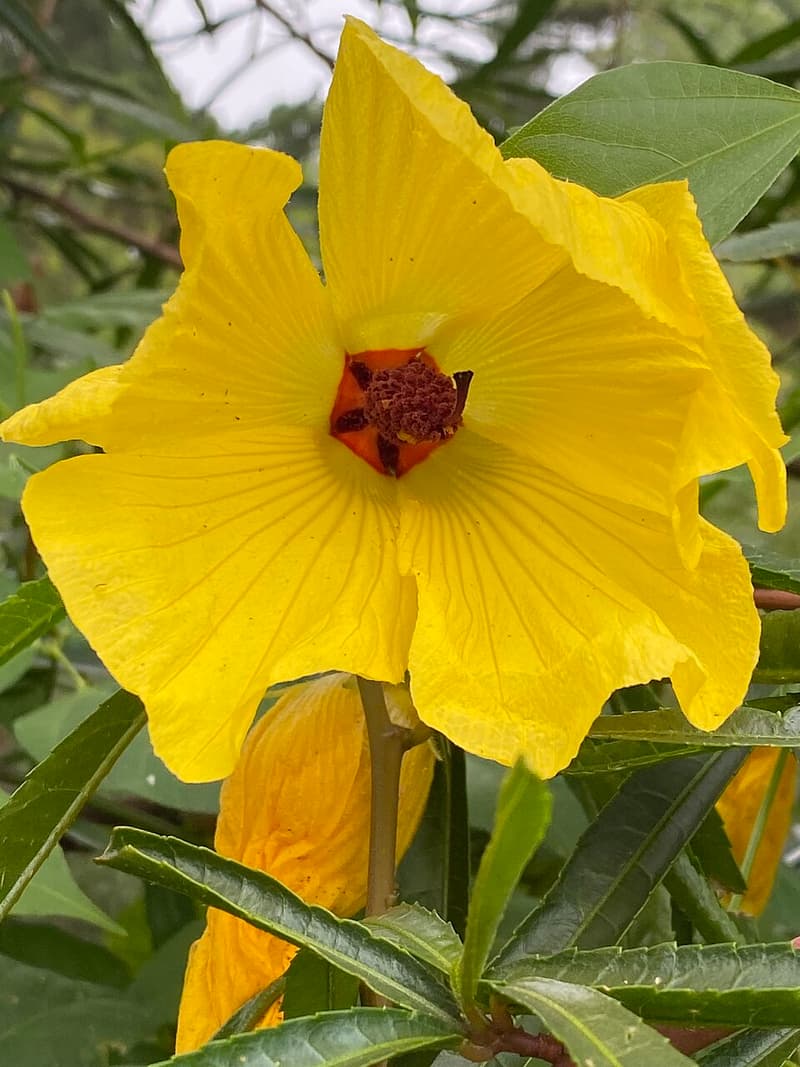
Native Hibiscus is instantly recognisable for its large, buttery yellow flowers with deep red or burgundy centres. The blooms open wide in full sun, creating a bold and joyful display that feels unmistakably tropical. Each flower lasts only a day, but the steady succession of new blooms ensures a constant show of colour, symbolising abundance and vitality in the Queensland landscape.
Ecological and cultural significance
Ecologically, Native Hibiscus plays an important role in supporting pollinators. Its nectar-rich flowers attract bees, butterflies and birds, helping sustain wildlife during the long summer flowering period. In some Aboriginal communities along the east coast, the plant has been used for generations. Fibres from the bark were traditionally used for making string and rope, while parts of the plant were valued for their medicinal properties. These uses reflect a deep understanding of the plant’s strength, flexibility and healing qualities.
Floral inspiration
In floral design, Native Hibiscus brings warmth, colour and a sense of ease to arrangements. Its bold blooms are perfect for bright summer bouquets, beachside events and relaxed tropical designs. Florists often use it to create a feeling of sunlight and openness, pairing it with lush greenery or native foliage to capture the carefree energy of Queensland’s warmer seasons.
Banksia (Banksia species)
Where it grows in Queensland
Several banksia species are common in coastal Queensland landscapes, thriving especially in sandy, well-drained soils near beaches, heathlands and open forests. They are found from the Gold Coast through the Sunshine Coast and all the way to far north Queensland, adapting to a wide range of climates from subtropical to tropical. Their ability to grow in nutrient-poor soils allows them to thrive in environments where few other trees can survive, making them essential to the structure and stability of coastal ecosystems.
When it flowers
Flowering varies by species. Many peak from late summer through winter, while some flower at other times.
What makes it iconic
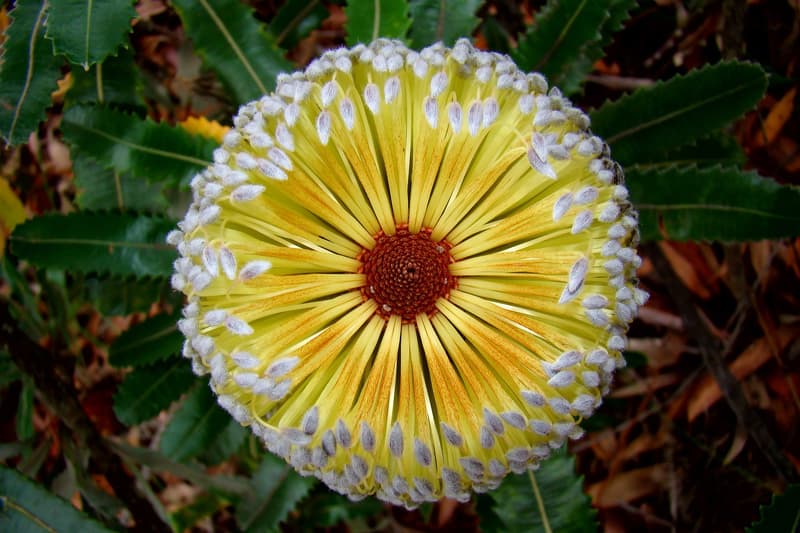
Banksias are instantly recognisable for their bold, cone-shaped flower spikes, each made up of thousands of tiny individual flowers packed tightly together. These spikes gradually open from the base upwards, creating a slow, evolving display of colour. Depending on the species, hues range from soft creamy yellows to rich golds, deep bronze and burnt orange, giving banksias a distinctly earthy, sculptural presence that feels both ancient and modern.
Ecological significance
Ecologically, banksias are a cornerstone species in Queensland’s ecosystems. Their nectar-rich flowers sustain birds, bats and a wide range of insects, including honeyeaters and native bees. Long after flowering has finished, the woody cones continue to provide shelter and food for insects and small animals. Many species are also fire-adapted, with cones that open after bushfires to release seeds, allowing banksias to regenerate and re-establish quickly. This makes them vital to the natural recovery of landscapes after fire.
Floral inspiration
In floral design, banksias are prized for their texture, structure and natural drama. Their strong form anchors arrangements, while their warm, earthy colours add depth and character. They are equally popular in fresh bouquets and dried displays, where their shape and colour hold beautifully over time. Designers often use banksias to create native-inspired, architectural arrangements that reflect the resilience and raw beauty of the Australian landscape.
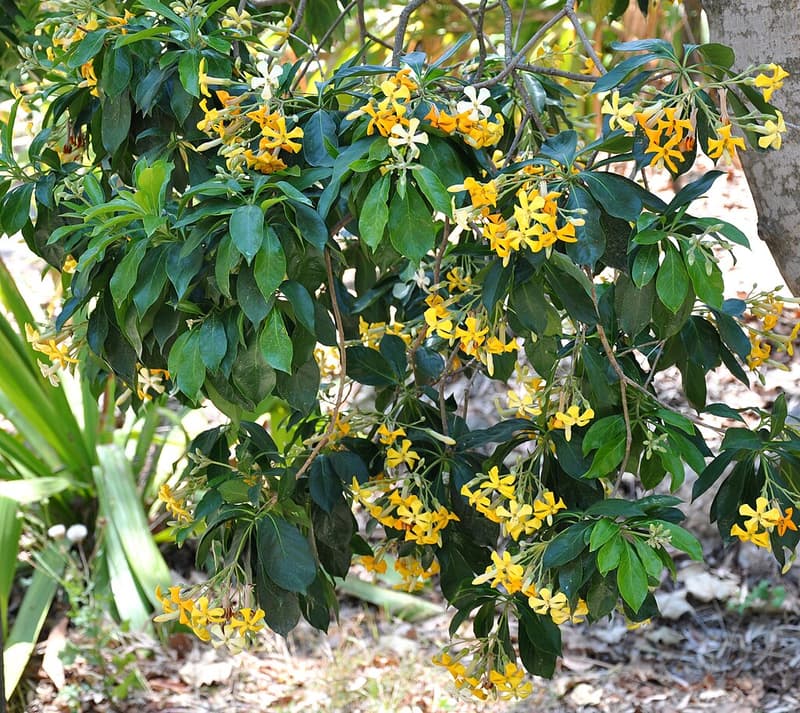
Native Frangipani (Hymenosporum flavum)
Where it grows in Queensland
Native Frangipani is common along Queensland’s coastline, where it grows naturally in subtropical and tropical rainforests, as well as along forest edges and creek lines. It has also become a familiar presence in urban areas, thriving in gardens, parks and streetscapes across coastal towns and cities. Its tolerance of heat, humidity and varying soils has made it a much-loved ornamental tree, blending seamlessly into both natural and built environments.
When it flowers
Late spring through summer.
What makes it iconic
Native Frangipani is best known for its creamy yellow, star-shaped flowers and their gentle, lingering fragrance. The scent becomes stronger in the evenings, drifting through gardens and streets and creating an atmosphere that many people associate with warm nights and slow summer rhythms. This combination of soft colour and perfume has made Native Frangipani a sensory signature of Queensland’s coastal regions.
Ecological significance
Ecologically, Native Frangipani plays an important role in supporting pollinators that are active at dusk and during the night. The fragrant flowers attract moths as well as bees, contributing to pollination cycles that are often overlooked but essential to healthy ecosystems. By flowering when many other trees have finished flowering, it helps extend the availability of nectar across the season.
Floral inspiration
In floral design, Native Frangipani brings a sense of softness, warmth and nostalgia to arrangements. Its delicate blooms are ideal for relaxed summer designs, garden-style bouquets and informal celebrations. Designers often use it to evoke memory and mood rather than bold structure, capturing the quiet beauty of Queensland evenings in floral form.
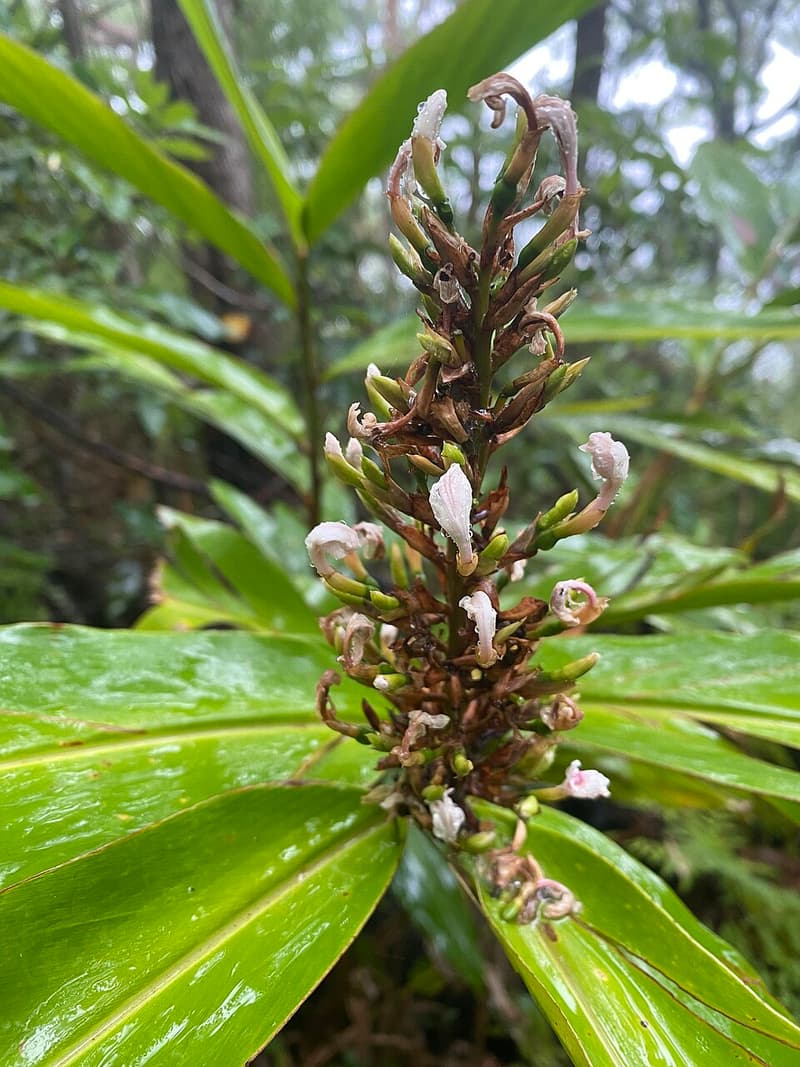
Native Ginger (Alpinia caerulea)
By Martin Hannan-Jones - https://www.inaturalist.org/photos/251925132, CC BY 4.0,
Where it grows in Queensland
Native Ginger is found along the eastern coast of Queensland, from the subtropical south-east to tropical north Queensland. It grows naturally in rainforests, along creek lines and in moist gullies, where filtered light, humidity and rich soils allow it to thrive. In the wild, it forms lush understory clumps beneath tall trees, while in gardens it is commonly planted to create a dense, tropical feel.
When it flowers
Flowering occurs from spring through summer, with peak displays during the warm, wet months. The flowers are followed by bright blue berries that extend the plant’s visual appeal well beyond the blooming period.
What makes it iconic
Native Ginger is known for its upright stems, broad glossy leaves and delicate white flowers with soft yellow markings. While the flowers themselves are subtle, the vivid blue fruit that follows is striking and unexpected, standing out against deep green foliage. Together, the flowers and berries give the plant a uniquely Queensland rainforest character.
Ecological and cultural significance
The flowers and fruit of Native Ginger support birds, insects and small rainforest animals, while the dense clumps provide shelter at ground level. In some Aboriginal communities within its natural range, parts of the plant were traditionally used for food and practical purposes, and it remains an important understory species in healthy rainforest ecosystems.
Floral inspiration
In floral design, Native Ginger adds lush greenery, texture and a strong sense of tropical place. Its leaves are often used as a structural base in arrangements, while the berries and stems are used to add contrast and depth to rainforest-inspired compositions.
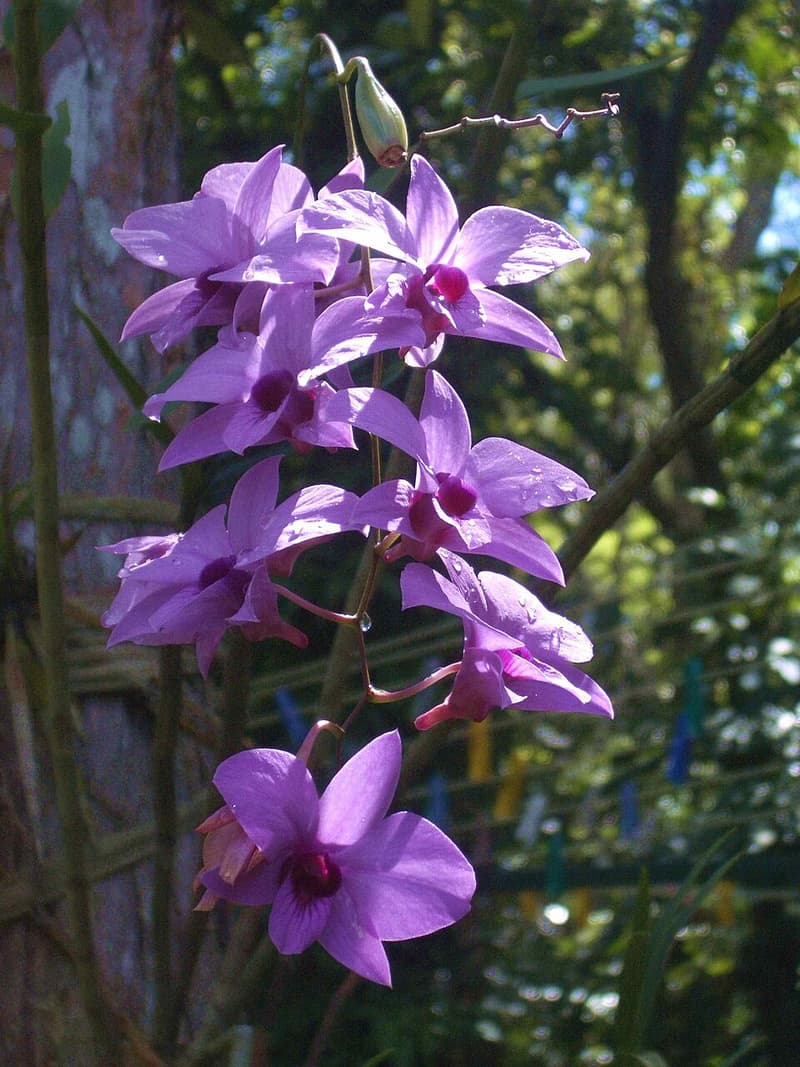
Cooktown Orchid (Dendrobium bigibbum)
By No machine-readable author provided. John Hill assumed (based on copyright claims). - No machine-readable source provided. Own work assumed (based on copyright claims)., CC BY 2.5,
Where it grows in Queensland
The Cooktown Orchid is native to tropical north Queensland, where it grows on trees, rocks and cliff faces in open forests and rainforests from the Torres Strait and Cape York down to the tropics. It thrives in warm conditions with good airflow and seasonal rainfall, often clinging to branches high above the forest floor.
When it flowers
Flowering occurs primarily from late winter to spring, with blooms often triggered by changes in temperature and light conditions. In favourable conditions, flowering can be spectacular, with plants covered in masses of blossoms.
What makes it iconic
The Cooktown Orchid is instantly recognisable for its soft purple to pink flowers, each with a delicate, elegant form that appears almost weightless. The blooms can last for weeks, giving the plant a long display period that contrasts beautifully with its tough, resilient growing habit.
Ecological and cultural significance
As Queensland’s official floral emblem, the Cooktown Orchid holds strong cultural meaning and represents the state’s tropical identity. Ecologically, it contributes to the diversity of epiphytic plants that create layered rainforest habitats, supporting insects and small animals that rely on flowering habitats.
Floral inspiration
In floral design, Cooktown Orchid flowers bring elegance, refinement and a sense of occasion. They are often used in minimal, considered arrangements where each bloom can be appreciated, making them ideal for ceremonial designs and tropical luxury styling.
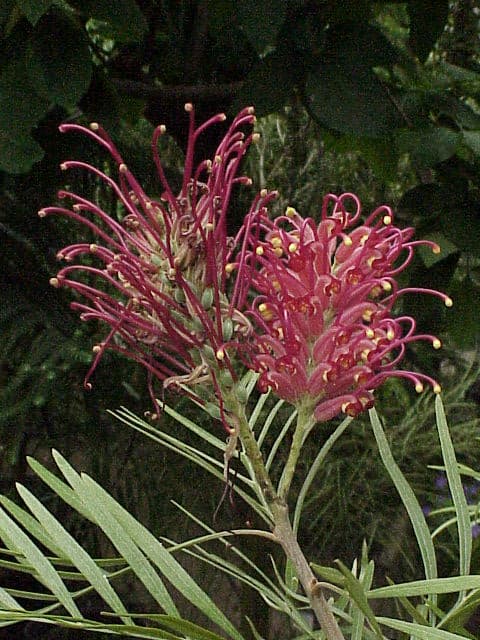
Red Silky Oak (Grevillea banksii)
Where it grows in Queensland
Red Silky Oak is native to eastern Queensland, particularly in coastal forests, open woodlands and sandy soils from the Sunshine Coast through to tropical north Queensland. It is well adapted to heat, sun and poor soils, making it a reliable plant in both wild landscapes and gardens.
When it flowers
Flowering occurs intermittently throughout the year. The long flowering season provides a steady source of nectar when other food sources are scarce.
What makes it iconic
The bold red, toothbrush-shaped flowers of Red Silky Oak are dramatic and unmistakable. Each flower spike is packed with long, curling stamens that create a soft, spidery texture and intense colour. When in bloom, the plant appears alive with movement as birds gather to feed.
Ecological and cultural significance
Red Silky Oak is one of Queensland’s most important bird-attracting plants. Honeyeaters, lorikeets and other nectar-feeding birds rely on its flowers, making it a keystone species in many ecosystems. Its resilience and adaptability also make it an important plant for land restoration and habitat creation.
Floral inspiration
In floral design, Red Silky Oak adds bold colour, texture and strong lines. Its flowers are used to create dynamic, native arrangements that feel energetic and alive, making it a favourite for designs that celebrate Queensland’s wild, untamed beauty.
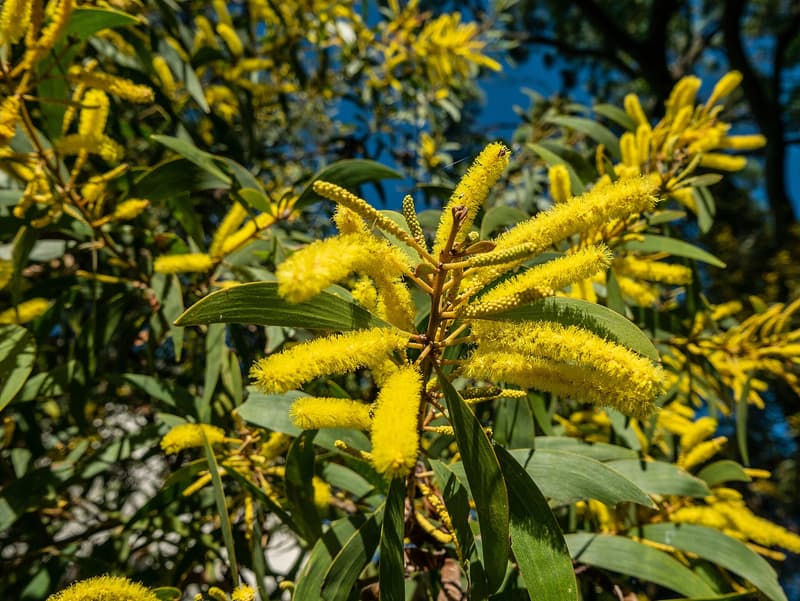
Earleaf Wattle (Acacia aulacocarpa)
By John Robert McPherson - Own work, CC BY-SA 4.0,
Where it grows in Queensland
Earleaf Wattle is native to eastern Queensland, growing from tropical north Queensland down through the subtropics into south east Queensland. It thrives in open forests, woodland edges and regenerating landscapes, often appearing quickly after disturbance and helping stabilise soil.
When it flowers
Flowering occurs mainly from autumn through winter, often from April to August, varying by region.
What makes it iconic
Earleaf Wattle produces masses of pale yellow, fluffy flower spikes that create a glowing haze across the canopy. The flowers bring warmth and brightness to the landscape at a time of year when colour is limited, making their appearance feel especially uplifting.
Ecological and cultural significance
Like many wattles, Earleaf Wattle plays a vital ecological role as a nitrogen fixer, improving soil health and supporting the growth of surrounding plants. Its early flowers provide essential food for insects and birds at the end of winter, helping ecosystems restart after cooler months. Across many parts of Australia, Aboriginal people have traditionally used wattles for tools, fibre and food, reflecting their importance across generations.
Floral inspiration
In floral arrangements, wattle adds softness, light and movement. Its delicate blooms are ideal for seasonal bouquets that celebrate renewal and transition, bringing a sense of warmth and optimism into winter and early spring designs.
Golden Penda (Xanthostemon chrysanthus)
Where it grows in Queensland
Golden Penda is native to tropical north Queensland, where it grows naturally in coastal rainforests, open woodlands and along forest margins from around the Ingham region to Cape York. It thrives in warm, humid conditions and well-drained soils, and is now widely planted in tropical towns and cities as a feature tree. When in bloom, it becomes one of the most recognisable flowering trees in Queensland’s north.
When it flowers
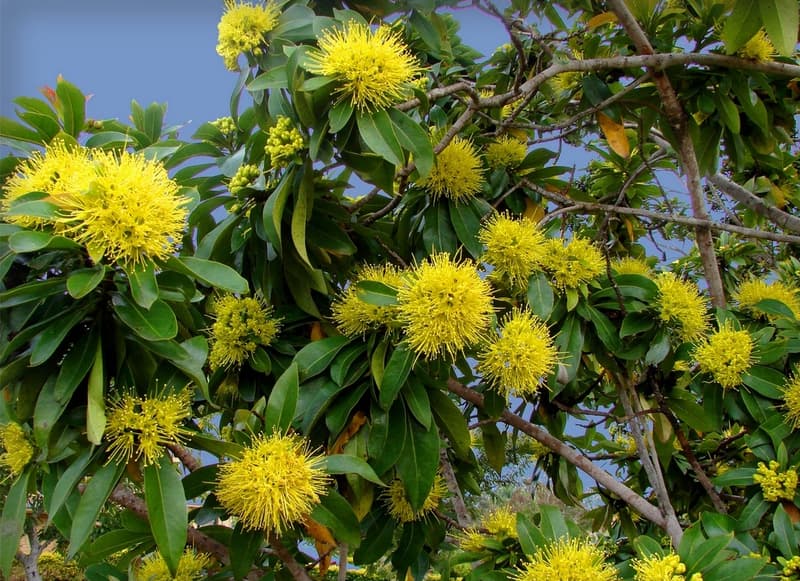
Flowering occurs mainly from late spring through summer, with peak displays often triggered by heat and seasonal rainfall. During this time, entire trees can appear covered in glowing yellow blooms, making them stand out dramatically against deep green foliage.
What makes it iconic
Golden Penda is instantly recognisable for its large, fluffy, golden-yellow flower clusters, each made up of hundreds of long stamens. These blooms appear in dense, rounded heads that glow in sunlight and give the tree an almost luminous presence. When flowering is at its peak, the tree seems to hum with life, colour and movement.
Ecological and cultural significance
The nectar-rich flowers are an important food source for birds, bees and insects in tropical ecosystems, particularly honeyeaters and native bees. In parts of north Queensland, Aboriginal people have traditionally used flowering trees like Golden Penda as seasonal indicators, helping to mark changes in weather and food availability. The tree also plays a role in stabilising soils and supporting biodiversity in rainforest edge habitats.
Floral inspiration
In floral design, Golden Penda brings brightness, energy and volume to arrangements. Its bold yellow blooms are often used as focal elements in tropical compositions, celebrating warmth, abundance and the vivid colours of north Queensland landscapes.
Blue Quandong (Elaeocarpus grandis)
.JPG)
Where it grows in Queensland
Blue Quandong is native to tropical and subtropical rainforests of north and central eastern Queensland, often along watercourses, and extends into northeastern New South Wales. It is a large rainforest tree that forms part of the upper canopy, contributing to the layered structure and shade of healthy forest environments.
When it flowers
Flowering is most common from spring into summer, though timing can vary by region, and fruit may be seen for long periods. The striking electric blue fruits persist for months, extending the tree’s visual impact well beyond its flowering season.
What makes it iconic
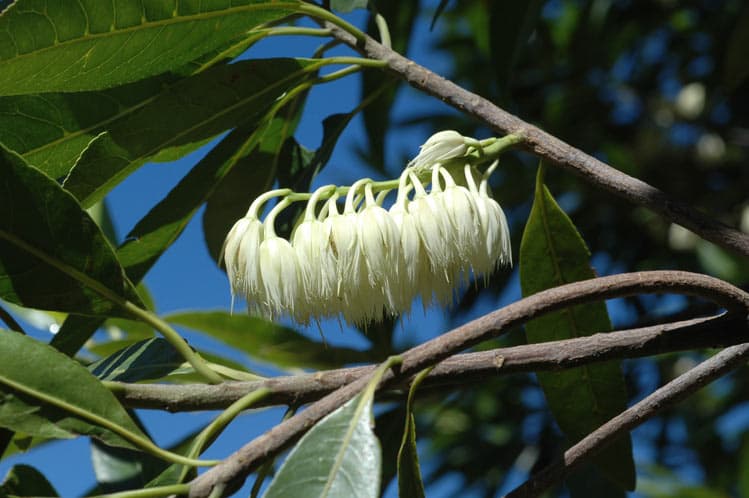
The flowers of the Blue Quandong are fine and fringed, almost lace-like in appearance, with long petals that flutter in the breeze. While subtle at first glance, they create a soft, cloud-like effect across the canopy. The vivid blue fruit that follows is unforgettable, creating one of the most unusual and beautiful colour contrasts found in Queensland rainforests.
Ecological and cultural significance
Blue Quandong plays an important role in rainforest ecosystems, providing food for birds, fruit bats and other wildlife. In some Aboriginal communities within its natural range, the fruit has traditionally been eaten and used as a seasonal food source. The tree remains a valuable indicator of healthy rainforest systems and long-term ecological stability.
Floral inspiration
In floral design, Blue Quandong is valued for its contrast and texture. Designers use its flowers, foliage and fruit to create arrangements that feel layered, natural and deeply connected to rainforest environments, especially in designs that highlight movement and colour transition.
Beach Spider Lily (Crinum pedunculatum)
ByPeter coxhead - Own work, CC0,
Where it grows in Queensland
Beach Spider Lily is native to coastal Queensland, where it grows along beaches, estuaries, river mouths, mangroves and coastal wetlands from the subtropics to the far north. It thrives in sandy soils, saline conditions and seasonally flooded ground, making it one of the most resilient coastal flowering plants in the state. Large clumps often form naturally near water, anchoring soil and softening the edges of land and sea.
When it flowers
Flowering occurs mainly from late spring through summer, often after rain or during periods of high humidity. The blooms rise above the foliage on tall stems and can appear in waves throughout the warmer months, especially in tropical and coastal regions.
What makes it iconic
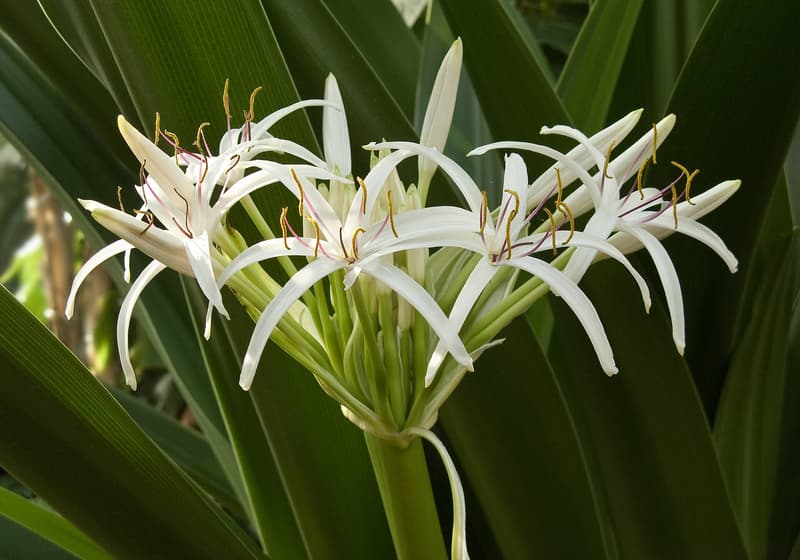
Beach Spider Lily is instantly recognisable for its large, white, star-shaped flowers with long, curling petals that resemble spider legs. The flowers open wide in the evening and release a soft, sweet fragrance that drifts across the coast at night. Against dark water, sand or mangroves, the blooms seem to glow, giving the plant a calm but powerful presence in the landscape.
Ecological and cultural significance
Ecologically, Beach Spider Lily plays an important role in stabilising coastal soils and protecting fragile shorelines from erosion. Its flowers attract insects and night pollinators during the warmer months when flowering resources shift with rain and humidity.
In some Aboriginal communities along Queensland’s coast, plants like the Beach Spider Lily have traditionally been used for practical purposes, including fibre and food preparation, and flowering has been observed as part of seasonal change. The plant remains a strong symbol of resilience in environments shaped by salt, wind and water.
Floral inspiration
In floral design, Beach Spider Lily brings elegance, movement and a sense of calm to arrangements. Its long petals and luminous white colour are often used in coastal, minimalist and tropical designs where space, light and natural rhythm are allowed to speak. Even a single bloom can transform an arrangement into something serene and memorable.
Celebrating Queensland Tropical Flowers in Everyday Life
Queensland tropical flowers are expressions of place. Bringing them into homes, events and gifts is a way of honouring the landscape and supporting local growers. Native flowers last well in the heat, suit Queensland’s climate, and tell a story that imported blooms cannot.
Florists such as Flowers Across Brisbane draw inspiration from these native species to create arrangements that reflect the colours, textures and energy of Queensland itself. Whether for birthdays, weddings or everyday moments, native flowers create a deeper emotional connection because they belong here.
Final Thoughts
Queensland tropical flowers are not just beautiful. They are resilient, meaningful and alive with purpose. Shaped by heat, rain, fire and time, they reflect the landscapes they come from and the ecosystems they sustain. From towering rainforest species to delicate coastal and inland blooms, each flower carries knowledge of land, climate and survival that has been refined over thousands of years.
Choosing to celebrate Queensland tropical flowers is also a way of slowing down and paying attention to place. These plants connect gardens, homes and events back to the environments that produced them, creating a deeper sense of belonging and respect for local nature. When we choose native blooms, we support biodiversity, local growers and the continuation of living landscapes.
In the end, Queensland’s flowers remind us that beauty does not need to be imported. Some of the world’s most extraordinary colour, form and resilience already exist here, growing exactly where they belong. This article reflects general knowledge shared across regions, and acknowledges that Aboriginal plant knowledge is diverse, place-based and specific to individual Nations.